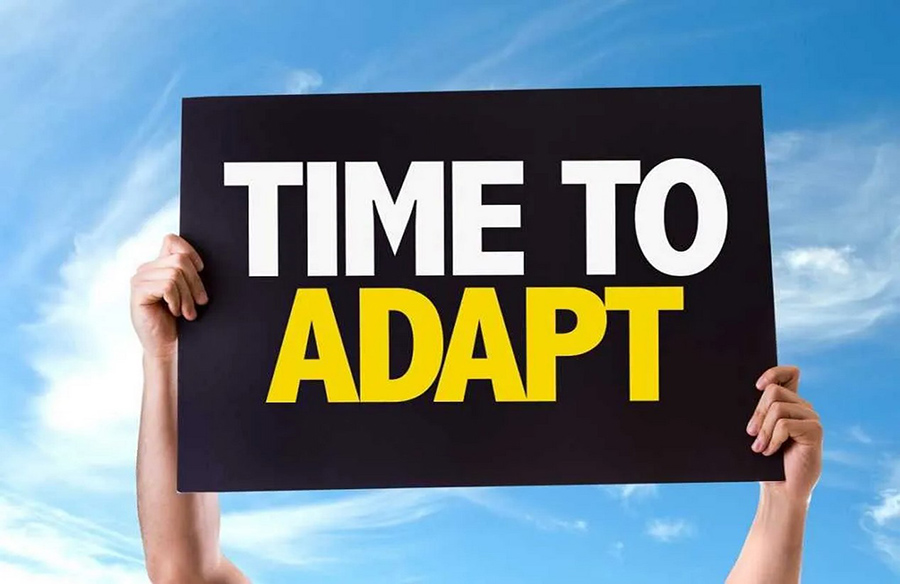
Adapting Leadership for a Changing Economy

128_900_584.jpg

In the face of “The Great Resignation” and the shifting landscape of employment, leaders must evolve their approach to foster growth and success within their organizations. Dr. Robyn Abou Chedid emphasizes that effective leadership is rooted in guidance and support rather than control and management. Here are five strategies to prepare leaders for navigating the challenges of a changing economy:

Embrace Mutual Success

Leaders must recognize that their team members’ personal aspirations contribute to their overall success. Encouraging transparency about individual goals and embracing employees’ entrepreneurial endeavors fosters a culture of mutual benefit. By aligning organizational objectives with personal aspirations, leaders empower their team members to thrive both professionally and personally.

Foster a Culture of Innovation

Create an environment where failure is viewed as a stepping stone to growth. Encourage risk-taking and experimentation by providing a safe space for employees to learn from mistakes. By embracing a “fail forward” mindset, leaders cultivate a culture of innovation and resilience within their teams.

Adopt a Coaching Approach

Shift from a directive management style to a coaching approach that promotes self-leadership and empowerment. Leaders should practice active listening, asking probing questions, and guiding employees to find their own solutions. By fostering curiosity and resourcefulness, leaders empower individuals to take ownership of their actions and decisions.

Embrace Continuous Learning

Leaders must be willing to unlearn outdated practices and embrace new perspectives in response to evolving market dynamics. Surrounding oneself with diverse viewpoints and challenging assumptions fosters innovation and adaptability. By prioritizing continuous learning and seeking out dissenting opinions, leaders position themselves and their organizations for long-term success.

Prioritize Self-Reflection and Alignment

Leadership begins with self-awareness and alignment with personal values and aspirations. By prioritizing self-care and introspection, leaders can create a supportive environment for their teams to thrive. By aligning personal goals with organizational objectives, leaders set the tone for a culture of purpose-driven growth and development.

In conclusion, effective leadership in a changing economy requires a shift towards empowerment, innovation, and self-awareness. By embracing mutual success, fostering innovation, adopting a coaching approach, embracing continuous learning, and prioritizing self-reflection and alignment, leaders can navigate the complexities of today’s business landscape with confidence and resilience. As we approach 2023, it’s clear that traditional leadership norms no longer suffice in the face of rapid economic change.


Better Stack: Transforming Observability with a $10M Investment

156_900_584.jpg

As the complexity of monitoring software and infrastructure grows, the need for effective observability solutions becomes paramount. Better Stack, led by co-founders Juraj Masar and Veronika Kolejak, emerges as a disruptive force in the observability market, offering a comprehensive platform to streamline monitoring, logging, and incident management.

Addressing the Observability Challenge

With observability data expanding at an alarming rate, developers grapple with the daunting task of managing multiple tools and datasets. Masar and Kolejak, drawing from their experience in software development, recognized the inefficiencies plaguing existing observability solutions. Better Stack aims to alleviate these challenges by consolidating disparate tools into a unified dashboard, enhancing efficiency and reducing complexity.

The Better Stack Advantage

In a crowded market, Better Stack distinguishes itself through innovation and user-centric design. With features such as AI-based incident silencing, the platform empowers engineers to discern critical incidents amidst the noise, minimizing disruptions and enhancing productivity. Moreover, Better Stack prides itself on affordability, speed, and user-friendliness, setting a new standard for observability solutions.

Expanding Customer Base and Investor Confidence

Despite facing competition from established players like Observe and Chronosphere, Better Stack has rapidly gained traction, attracting over 4,000 clients globally. The recent $10 million investment, led by Kaya and backed by prominent angel investors including Box CEO Aaron Levie, underscores investor confidence in Better Stack’s growth potential. With plans to expand its workforce and develop new products, Better Stack is poised for further innovation and market expansion.

A Vision for the Future

As Better Stack continues to redefine observability, its commitment to product excellence and customer satisfaction remains unwavering. With a focus on scalability, performance, and affordability, Better Stack aims to empower organizations to build resilient and efficient software ecosystems. With the support of investors like Creandum, Better Stack is well-positioned to shape the future of observability and software infrastructure.

In conclusion, Better Stack’s $10 million cash infusion heralds a new era of innovation and growth in the observability landscape. With a relentless focus on addressing customer needs and driving technological advancements, Better Stack is poised to revolutionize how organizations monitor and manage their software environments.

Lessons from a Startup Founder: Insights for Entrepreneurs

127_900_584.jpg

Embarking on the journey of entrepreneurship is a bold step filled with challenges and opportunities. Dr. Elias Abboud, the founder of Pectiv, shares invaluable insights gained from his experience in building a startup aimed at revolutionizing feminine hygiene solutions. Here are five key lessons every entrepreneur can glean from his journey:

Prioritize Problem-Solving

Dr. Abboud emphasizes the importance of addressing customers’ pain points as the guiding principle for any startup. By focusing on solving real problems with innovative solutions, entrepreneurs can differentiate themselves and create meaningful impact in their respective markets.

Deliver Exceptional Customer Service

Beyond product innovation, sustaining success requires a commitment to exceptional customer service. Dr. Abboud underscores the significance of post-sales support in fostering long-term customer loyalty. Humanizing interactions, empathetic engagement, and efficient issue resolution are essential for maintaining high customer satisfaction levels.

Set Ambitious Goals with Grounded Execution

Setting ambitious yet achievable goals is crucial for driving growth and performance. Dr. Abboud advocates for aiming high to push boundaries and achieve extraordinary results. However, it is equally essential to remain grounded and dedicated to diligent execution to turn lofty aspirations into tangible outcomes.

Strategically Manage Capital Allocation

While capital is essential for startup growth, Dr. Abboud advises entrepreneurs to exercise caution in seeking venture capital too early. Bootstrapping allows founders to retain control and validate their business models before pursuing external funding. Strategic capital allocation and judicious financial management are vital for long-term sustainability and success.

Embrace Lifelong Learning

In the dynamic landscape of entrepreneurship, continuous learning is indispensable. Dr. Abboud emphasizes the role of knowledge acquisition in staying agile, making informed decisions, and adapting to evolving market dynamics. By prioritizing ongoing learning and staying attuned to customer needs, entrepreneurs can remain competitive and resilient amidst uncertainty.

In conclusion, Dr. Elias Abboud’s entrepreneurial journey offers valuable lessons for aspiring and established entrepreneurs alike. By embracing problem-solving, prioritizing customer service, setting ambitious yet grounded goals, strategically managing capital, and embracing lifelong learning, entrepreneurs can navigate challenges and seize opportunities to thrive in the ever-evolving business landscape.

Securing Software Supply Chains: The Rise of Kusari

155_900_584.jpg

As the software supply chain faces escalating threats, Kusari emerges as a promising solution, leveraging open source technologies to enhance security and transparency. Founded by industry veterans from finance and defense sectors, Kusari aims to revolutionize supply chain management, backed by substantial funding and a unique approach to the market.

Addressing Supply Chain Security Risks

With a staggering 88% of companies acknowledging software supply chain security as a significant enterprise-wide risk, and incidents of supply chain breaches on the rise, the urgency for robust solutions has never been greater. Kusari recognizes the pressing need for heightened awareness and proactive measures to mitigate these risks.

A Fresh Perspective on Security

While numerous vendors vie for prominence in the supply chain security landscape, Kusari distinguishes itself through its team’s diverse expertise and a commitment to innovation. Drawing inspiration from the Japanese feudal weapon kusari-fundo, Kusari embodies agility and strength in navigating complex security challenges.

Fusion of Open Source and SaaS

Kusari’s strategic approach combines open source foundations with a scalable Software-as-a-Service (SaaS) platform, offering unparalleled visibility and control over software dependencies. By democratizing access to essential tools and standards, Kusari empowers organizations to proactively manage their software ecosystems.

Empowering Decision-Makers

At the core of Kusari’s mission lies the empowerment of decision-makers, bridging the gap between security professionals and DevOps teams. Through its innovative platform, Kusari acts as a guiding beacon, enabling Chief Information Security Officers (CISOs) to navigate complex risk landscapes and empowering DevOps practitioners to address vulnerabilities efficiently.

Leveraging Open Source Technologies

Central to Kusari’s methodology is the utilization of the open source project Guac, a collaborative effort by the founding team. Guac serves as a foundational tool for identifying critical components within software supply chains and assessing exposure to potential risks. With Guac as its backbone, Kusari delivers actionable insights and remediation strategies to safeguard organizations against threats.

Pioneering Transparency and Security

In a competitive landscape, Kusari sets itself apart through its commitment to transparency and security. By democratizing access to essential security tools and fostering collaboration within the industry, Kusari aims to redefine best practices and elevate the standards of supply chain security.

Navigating Future Challenges

As Kusari prepares for its official launch, the team remains focused on agility and innovation. With future capabilities such as AI-driven chatbots on the horizon, Kusari continues to push boundaries in redefining supply chain security. Despite external challenges, Kusari remains steadfast in its mission to empower organizations and fortify their defenses against evolving threats.

In conclusion, Kusari’s emergence signifies a pivotal moment in the evolution of supply chain security. Armed with expertise, innovation, and a commitment to transparency, Kusari stands poised to revolutionize how organizations safeguard their software ecosystems in an increasingly volatile landscape.

scroll to top