CEO Faces Backlash for Social Media Behavior

33_900_584.jpg

A CEO finds himself under fire as his company faces a significant backlash following allegations that he used the company’s Instagram account to attack an influencer. The incident has led to a sharp decline in the company’s reputation and reviews.

Influencer’s Experience

Rupica Sudan, a prominent food and travel influencer, recounted an unsettling encounter with ParchmentPaper.com in a TikTok video posted in January. She shared that after posting a video of herself cooking with her father, she received what she perceived as unwarranted criticism from the official Instagram account of ParchmentPaper.com.

Escalating Situation

Sudan’s response to the comments led to further exchanges, with some viewers questioning the professionalism of the company’s behavior on social media platforms. Negative reviews on TrustPilot caused the company’s rating to plummet, prompting concerns about the CEO’s handling of the situation.

Legal Threats and Further Actions

As tensions escalated, Sudan reported receiving emails from the CEO, Brandon Howard, requesting the removal of her videos and threatening legal action. Sudan expressed her disbelief at the CEO’s response and highlighted multiple typos in the emails, raising questions about the professionalism of the company’s communication.

Allegations and Response

Sudan later raised concerns about her work email being used to sign up for inappropriate sites, though she lacked evidence directly linking Howard to the incident. Howard denied allegations of abusive behavior and criticized the influencer for inciting a negative media storm.

Social Media Impact

The incident sparked widespread discussion on social media platforms, with many expressing shock at the CEO’s behavior and questioning his leadership. Sudan’s video garnered millions of views and prompted a wave of incredulous reactions from viewers.

Conclusion

This incident serves as a reminder of the potential consequences of company leaders’ actions on social media and underscores the importance of maintaining professionalism and respect in online interactions. As social media continues to play a significant role in shaping public perception, companies and their executives must exercise caution and accountability in their online presence.

Beauty Manufacturing Company Accused of Disability Discrimination

32_900_584.jpg

A beauty manufacturing company in Illinois is facing allegations of disability discrimination after reportedly firing a worker on her first day due to her being deaf. The Equal Employment Opportunity Commission (EEOC) filed a lawsuit against the company, citing violations of the Americans with Disabilities Act (ADA).

Allegations and Lawsuit

According to the lawsuit filed by the EEOC, the worker, placed by a staffing agency, was terminated by Voyant Beauty, a producer of skincare, hair, and bath products, upon discovering her deafness on the first day of employment. The EEOC asserts that the worker was fully qualified for the job and capable of performing its essential duties.

Violation of ADA

The EEOC contends that Voyant’s actions constitute a violation of the ADA, which mandates employers to provide reasonable accommodations for individuals with disabilities. By terminating the worker based on her deafness, Voyant allegedly failed to adhere to this requirement.

Settlement and Consequences

Following negotiations, Voyant agreed to a consent decree, which entails compensating the former worker with $75,000, comprising $30,000 in back pay and $45,000 in compensatory damages. Additionally, the company committed to conducting annual training sessions for supervisory staff on disability discrimination.

Company Response

While Voyant denied the allegations, it emphasized its commitment to fostering an inclusive workplace environment. The company stated that the settlement reaffirms its dedication to prioritizing employee well-being and diversity.

Legal Perspective

Gregory Gochanour, regional attorney for the EEOC’s Chicago District Office, highlighted the illegality of basing employment decisions on unfounded stereotypes about an individual’s disability. He emphasized the importance of conducting individualized assessments to determine an applicant’s ability to perform job duties safely, potentially with accommodations.

In conclusion, the case underscores the significance of upholding the rights of individuals with disabilities in the workplace and the legal obligations of employers to provide reasonable accommodations as mandated by the ADA.

Strains in China-Russia Partnership

31_900_584.jpg

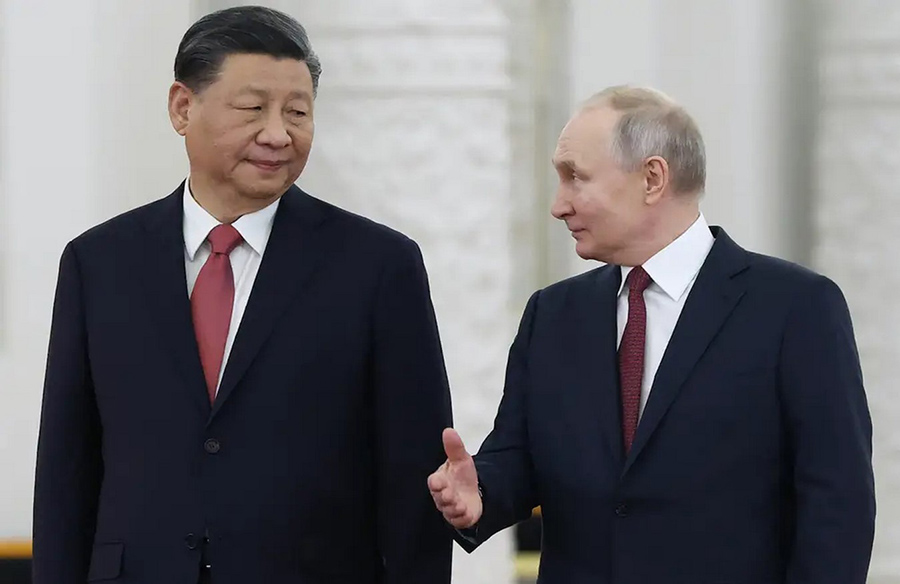
The enduring partnership between China and Russia, often characterized as “no limits” in scope, is facing potential challenges as the year 2024 unfolds. Recent developments, particularly regarding financial discussions between the two nations, suggest strains in their closely held relationship.

Delays in Yuan Loans

Russia’s finance ministry has been engaged in discussions with its Chinese counterparts regarding yuan loans. However, a notable delay in reaching a decision hints at potential tension within the partnership. Russian Finance Minister Anton Siluanov revealed in an interview with RIA state news agency that talks with Chinese authorities have been ongoing for an extended period without a conclusive outcome.

Siluanov acknowledged discussions on this matter during inter-ministerial dialogues towards the end of the previous year. Despite provisions in Russia’s finance ministry budget for yuan loans, no definitive agreement has been reached. The duration of these negotiations remains undisclosed.

Evaluation of Partnership

The alliance between China and Russia, often touted as having “no limits,” was formally affirmed in a joint statement issued on February 4, 2022, during Russian President Vladimir Putin’s visit to China for the Beijing Winter Olympics. However, reports emerged barely a month later, following Russia’s invasion of Ukraine, suggesting Chinese officials were reassessing their commitment.

Despite geopolitical shifts and global scrutiny, the partnership appears steadfast on the surface, with ongoing economic engagements. The symbiotic relationship has bolstered Russia’s economic resilience while challenging Western efforts to curtail Moscow’s actions in Ukraine.

Considerations for Yuan Loan Deal

Analysts speculate that Chinese authorities are deliberating the risks and rewards associated with a potential yuan loan agreement with Russia. Beyond political ramifications, Chinese commercial banks are assessing factors such as risk premiums and currency fluctuations amid the volatile geopolitical landscape.

Dong Jinyue, a senior economist at BBVA Research, emphasizes the need for Chinese banks to weigh risks meticulously, particularly amidst the ongoing conflict between Russia and Ukraine. Heightened financial scrutiny and the specter of secondary sanctions from the West have further complicated financial transactions between Chinese banks and Russian entities.

Impact of Secondary Sanctions

The imposition of secondary sanctions by the United States has prompted Chinese banks to intensify compliance measures concerning dealings with Russian businesses. Fear of repercussions under increasingly stringent sanctions regimes has led major Chinese banks to halt transactions with sanctioned Russian financial institutions.

This development underscores the multifaceted challenges facing bilateral financial relations between China and Russia. Dmitry Peskov, a spokesperson for the Kremlin, has acknowledged the complexities surrounding Chinese bank transactions, indicating ongoing efforts to address these issues through dialogue with Beijing.

House Republicans Sponsor “Life at Conception” Bill

30_900_584.jpg

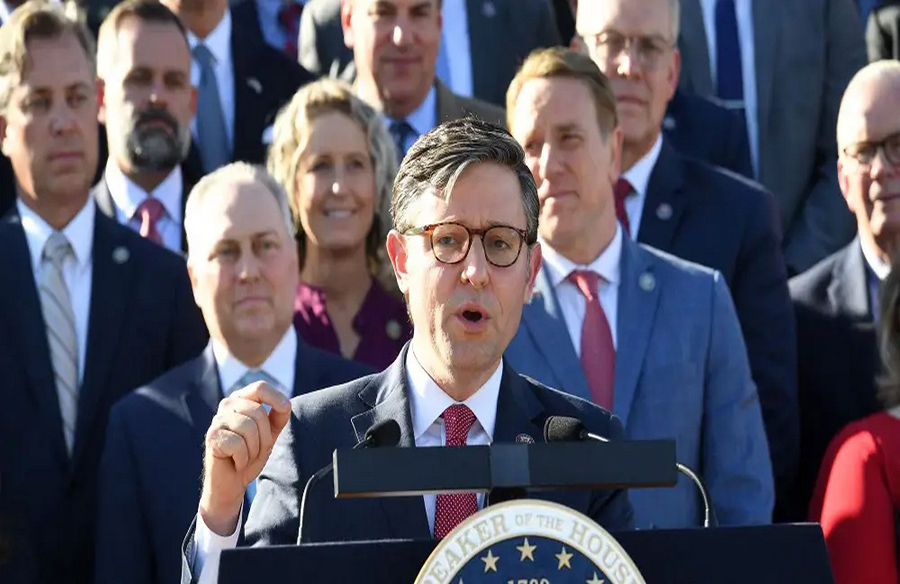
A significant portion of House Republicans has thrown their weight behind a bill asserting that life begins at conception, a stance brought into sharper focus following a recent ruling by the Alabama Supreme Court regarding frozen embryos.

The “Life at Conception Act”

A total of 125 House Republicans, including Speaker Mike Johnson, have cosponsored the “Life at Conception Act” during this Congress. The bill unequivocally declares that the term “human being” encompasses all stages of life, including fertilization and cloning.

IVF Exception Absent

Notably, the bill lacks any exception for in vitro fertilization (IVF), a medical procedure commonly used to assist conception. This omission raises concerns, particularly in light of the Alabama ruling, which may impact IVF treatments due to potential conflicts with state law.

Change in Position

Previously, a 2017 version of the bill introduced by Republican Senator Rand Paul included an explicit exemption for IVF procedures. However, the current iteration of the bill does not address this aspect, prompting questions about the rationale behind the change.

Speaker Johnson’s Stance

Speaker Johnson, a cosponsor of the bill, holds significant influence over House proceedings. While he has expressed strong anti-abortion views in the past, he recently affirmed his support for IVF treatments, recognizing their importance in addressing fertility issues.

Political Ramifications

In response to the bill’s lack of an IVF exception, Democratic groups have criticized House Republicans, framing their support as endangering reproductive rights and access to fertility treatments. They intend to leverage this issue in competitive House districts during upcoming elections.

Conclusion

The “Life at Conception Act” underscores the ongoing debate surrounding reproductive rights and the definition of human life. While it enjoys considerable support among House Republicans, questions persist about its potential implications for IVF and reproductive healthcare.

scroll to top